Open testing is live on Google Play

The piano practice companion.

A plan for every session, and every practice key you reach for while you play. From your first lesson to Grade 8 and beyond.

Free to download, in Ireland and the Netherlands for now. Testers get every new version first. Premium is €6.49 a month in the Netherlands, through Google Play.

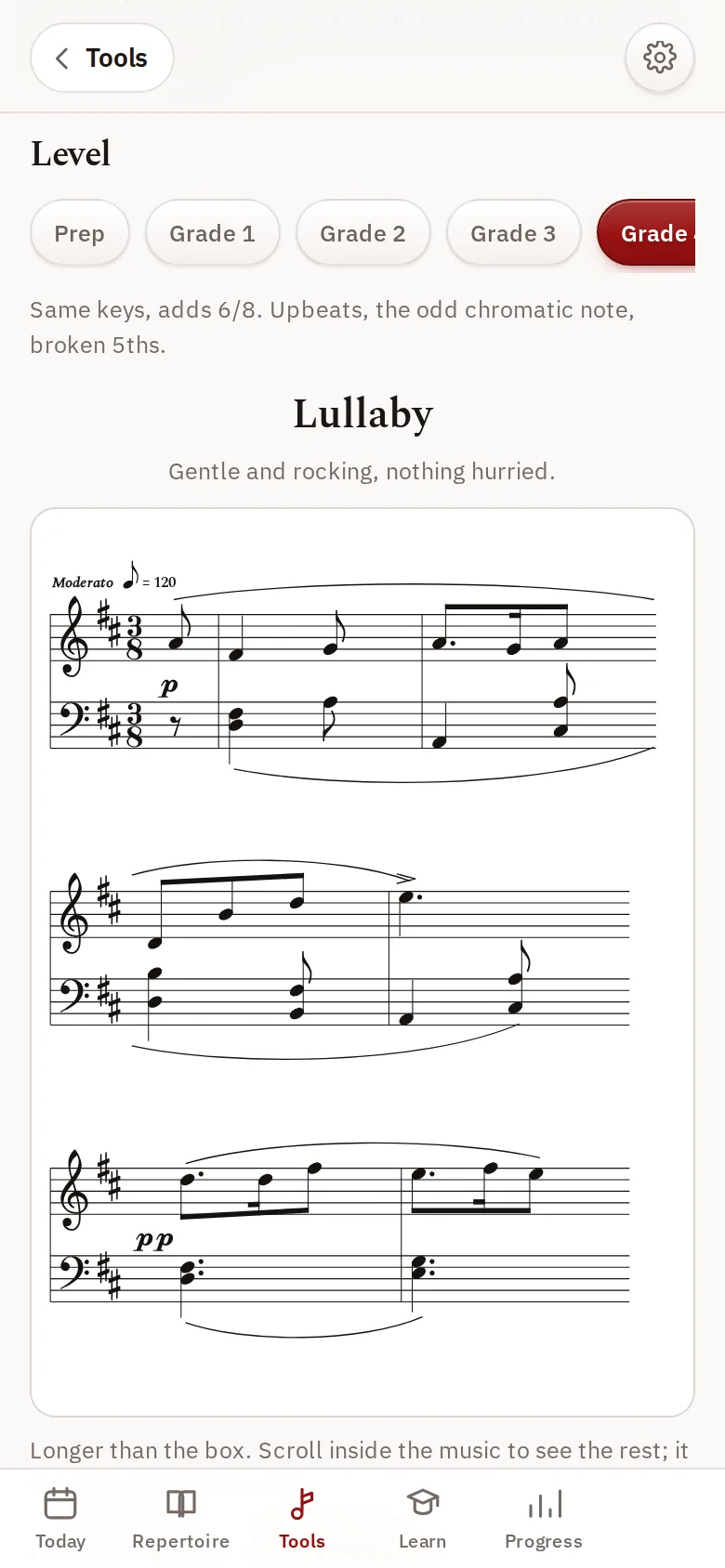
Sight reading screen with a new short piece written for Grade 4
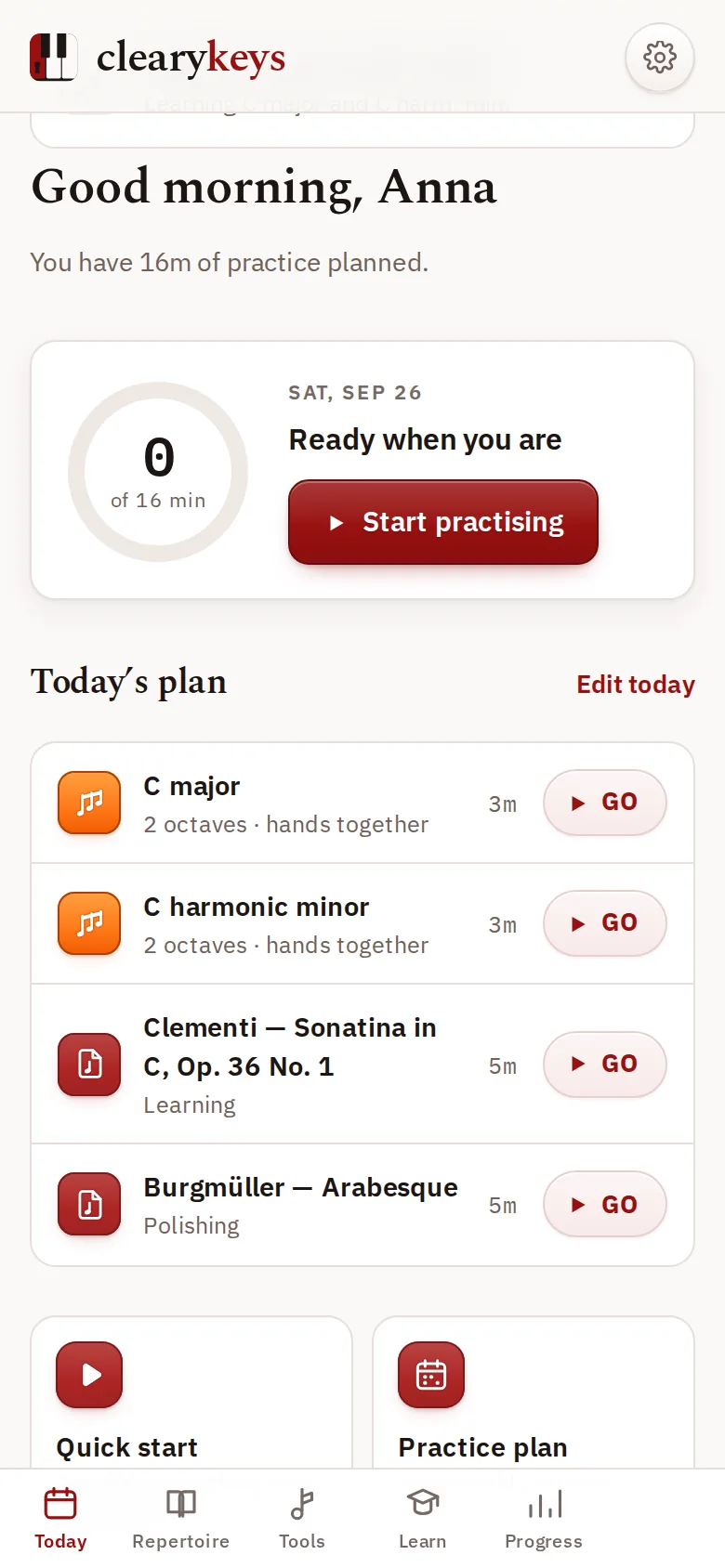
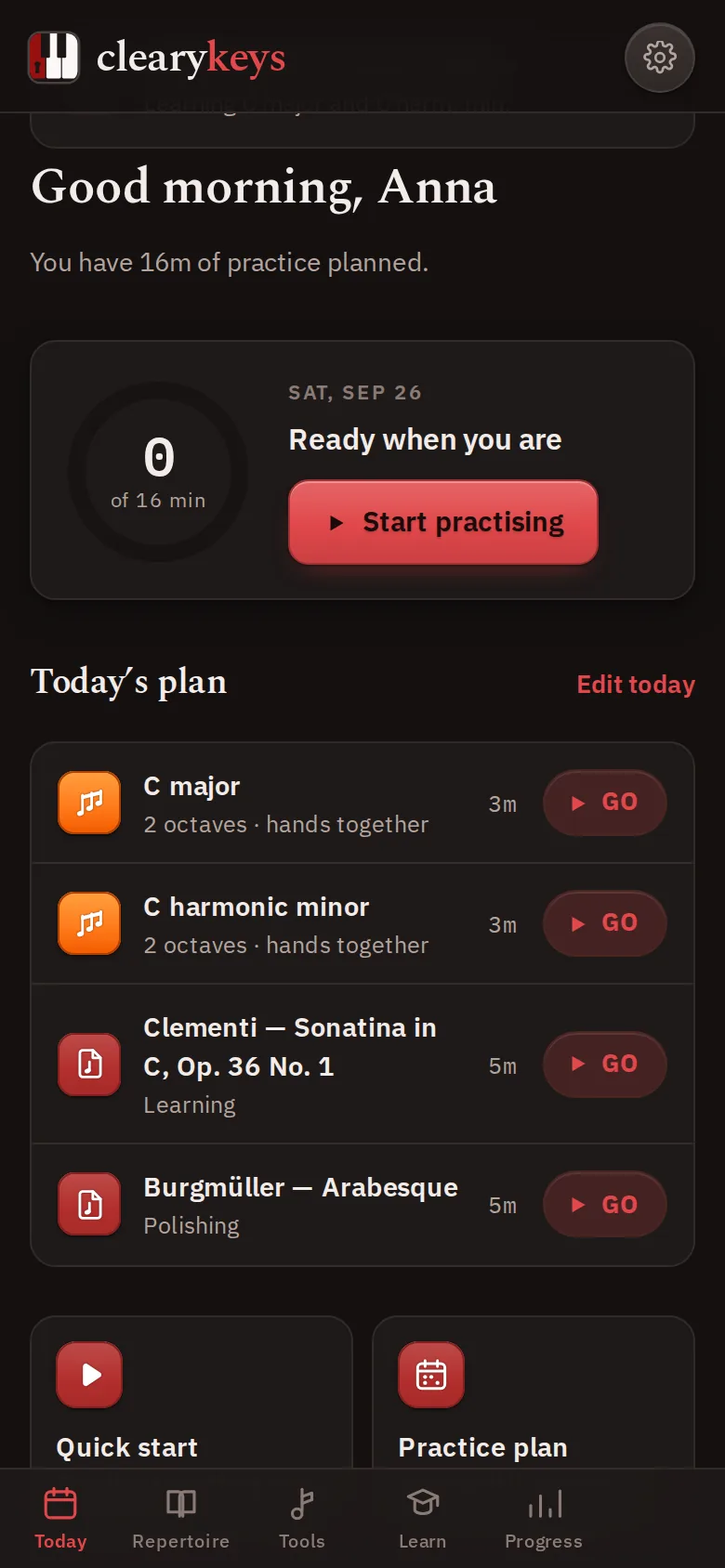
Today screen with 24 minutes of practice still to do: six things, next up a Clementi sonatina
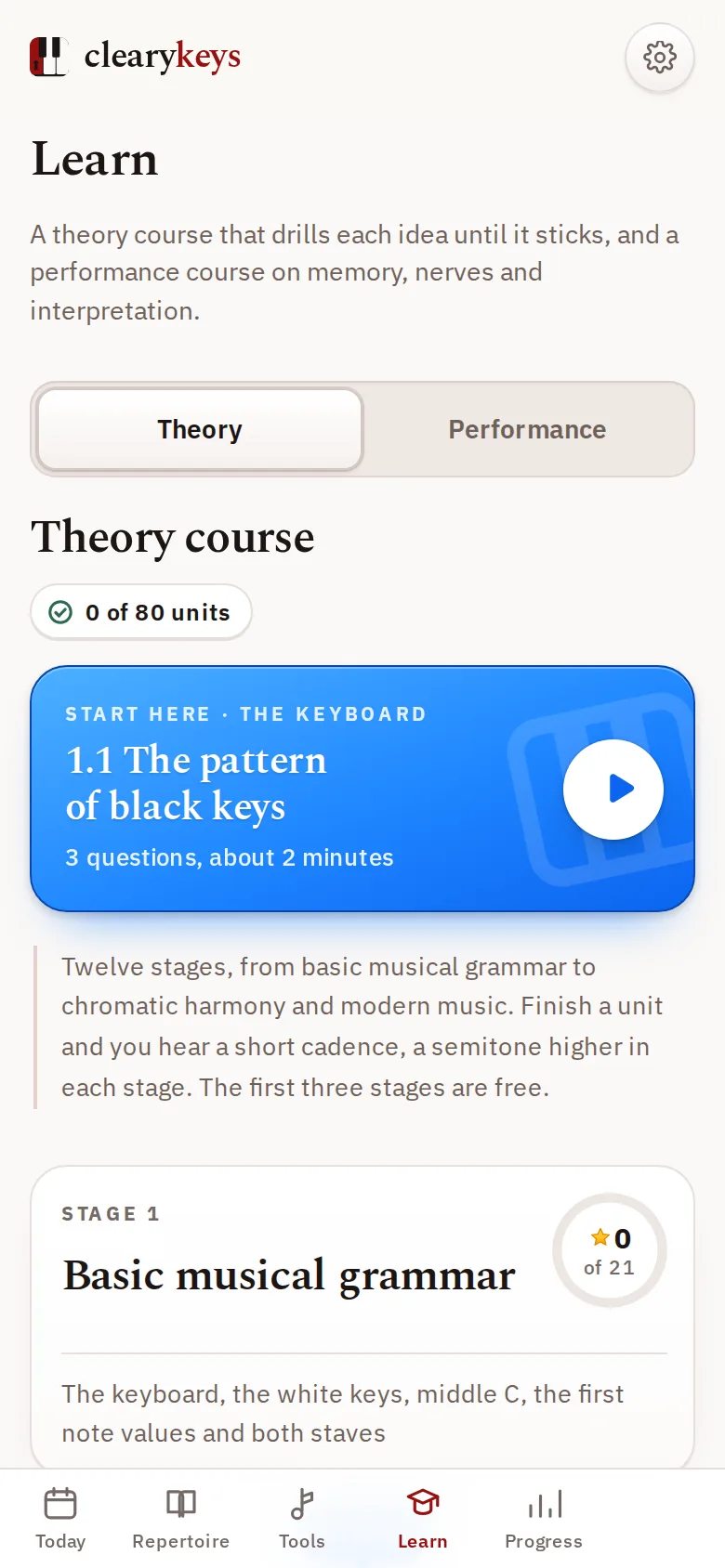
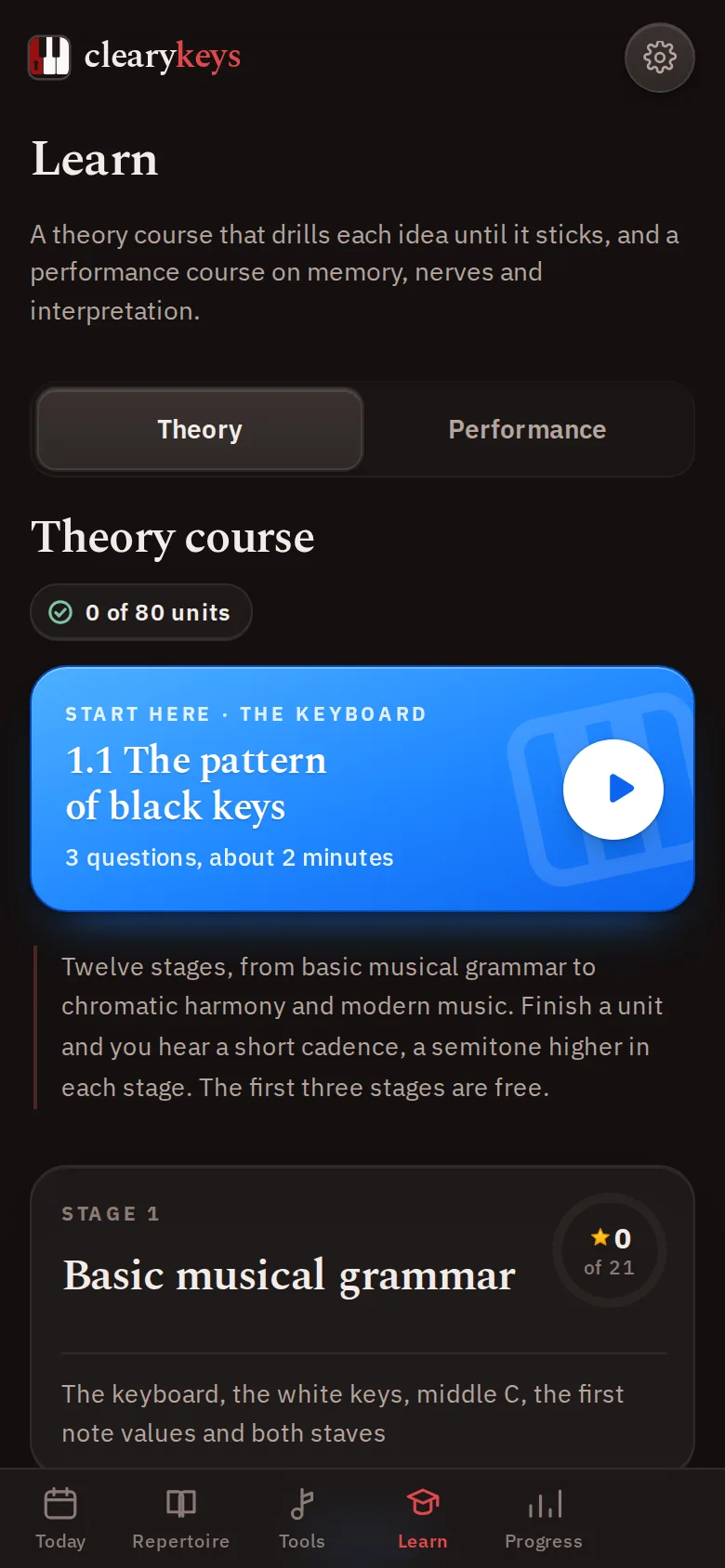
Theory course with stages 1 and 2 finished and stage 3, on quavers, dots and the signs on the page, next

What’s inside, counted.

103practice problems in the Practice Lab, from wrist tension to memory slips
500+ways to fix them, with step-by-step exercises and a practice challenge for each problem
372scales and arpeggios, 31 kinds in all 12 keys, with fingering
138theory units in 12 stages, from before Grade 1 to Grade 8
10sight-reading levels, Prep to Grade 8 and Diploma, a new piece every time
36composition briefs, beginner to advanced, each set up on the score for you
2,675pieces in the repertoire index, by 201 composers, Prep to Diploma

Try it · Unit 1.1 of the theory course

Your first theory lesson.

Step for step, the lesson every student starts with in the app. Spot the pattern in the black keys, use it to find every C and F on the piano, and see how many stars you get. It takes about two minutes.

Turn the sound on. The piano is the same one the app uses.

Every practice key, in one app.

Twenty-five practice keys in eight colour-coded families, in the colours they have in the app. Here are twenty-two of them: tap any one to see it.

Today

Sit down, and the session is ready.

01 · The plan

Your week, timed to the minute.

Tell ClearyKeys which days you play and what’s on your stand. Each day gets a plan: this week’s scales, a technique block and your pieces, each with the time it needs.

Today's plan
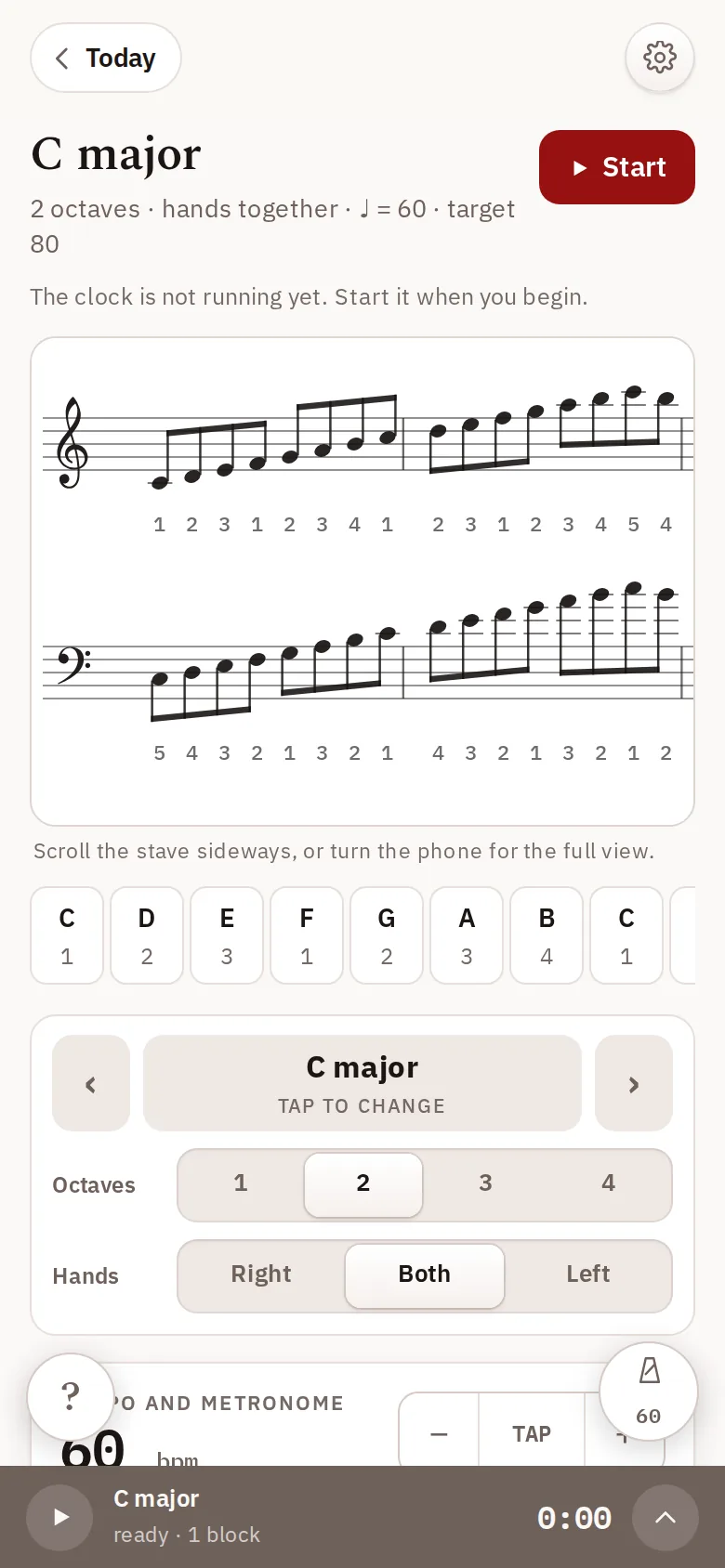
02 · Start practising

The music, the fingering and the clock on one screen.

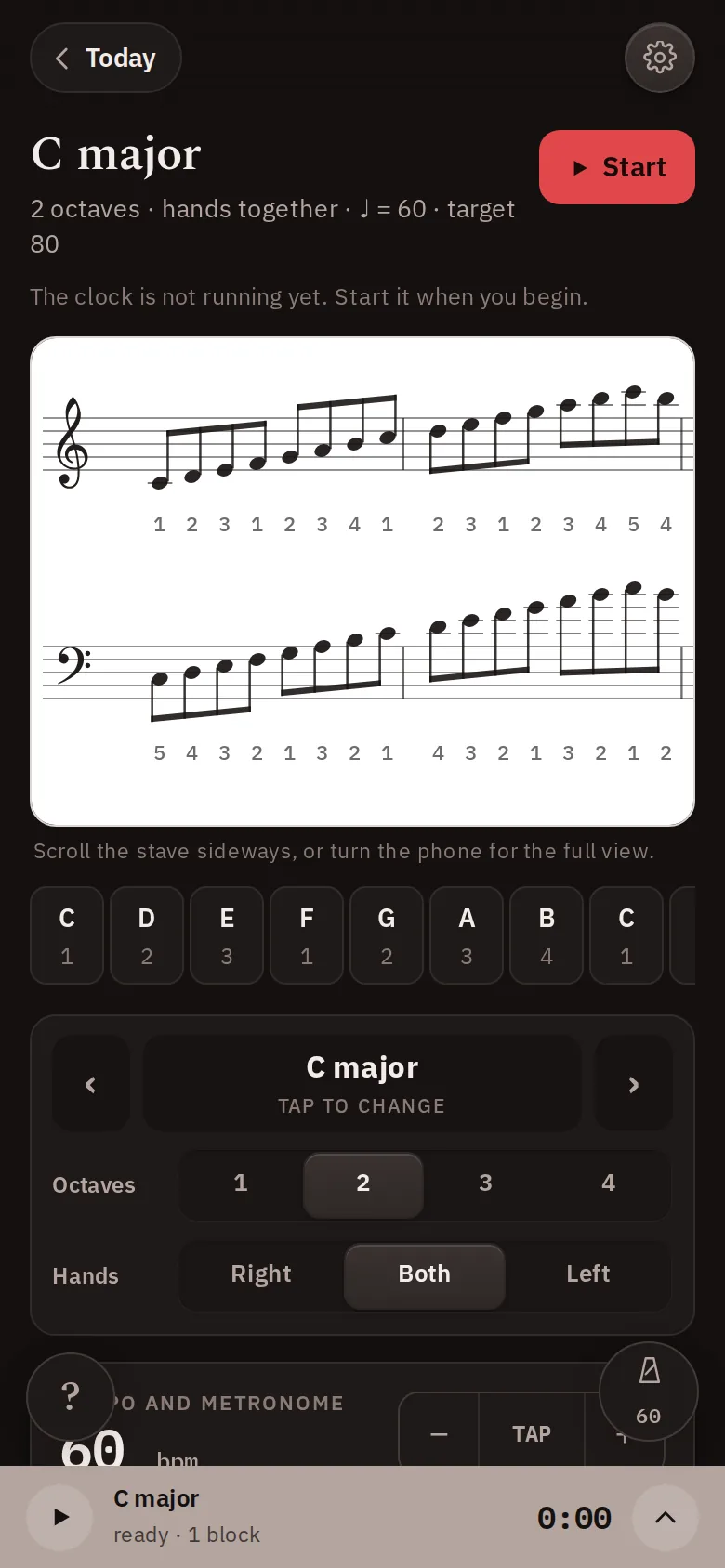
Each block opens with what you need: the scale written out with its fingering, octaves and hands, and a metronome. The clock runs while you play.

Practice session for C major, two octaves hands together, with the fingering under the notes and a metronome
03 · Your pieces

Every piece, from learning to performance ready.

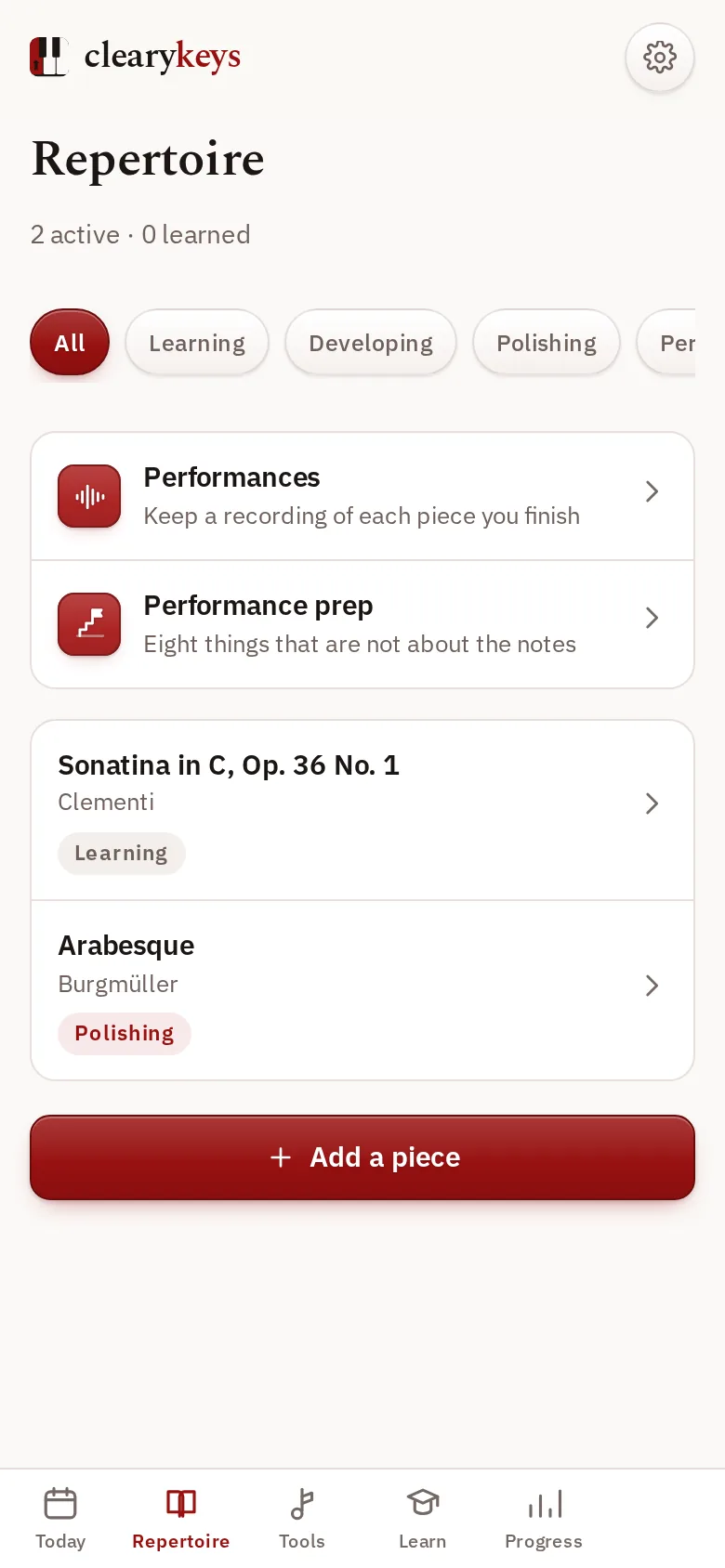
Pieces move through learning, developing, polishing and performance ready, and the plan shares the day’s time between them, higher priority first. Mark the bars that went wrong and the plan brings them back. Looking for the next piece? Browse 2,675 pieces by 201 composers, by grade from Prep to Diploma, and add one in a tap.

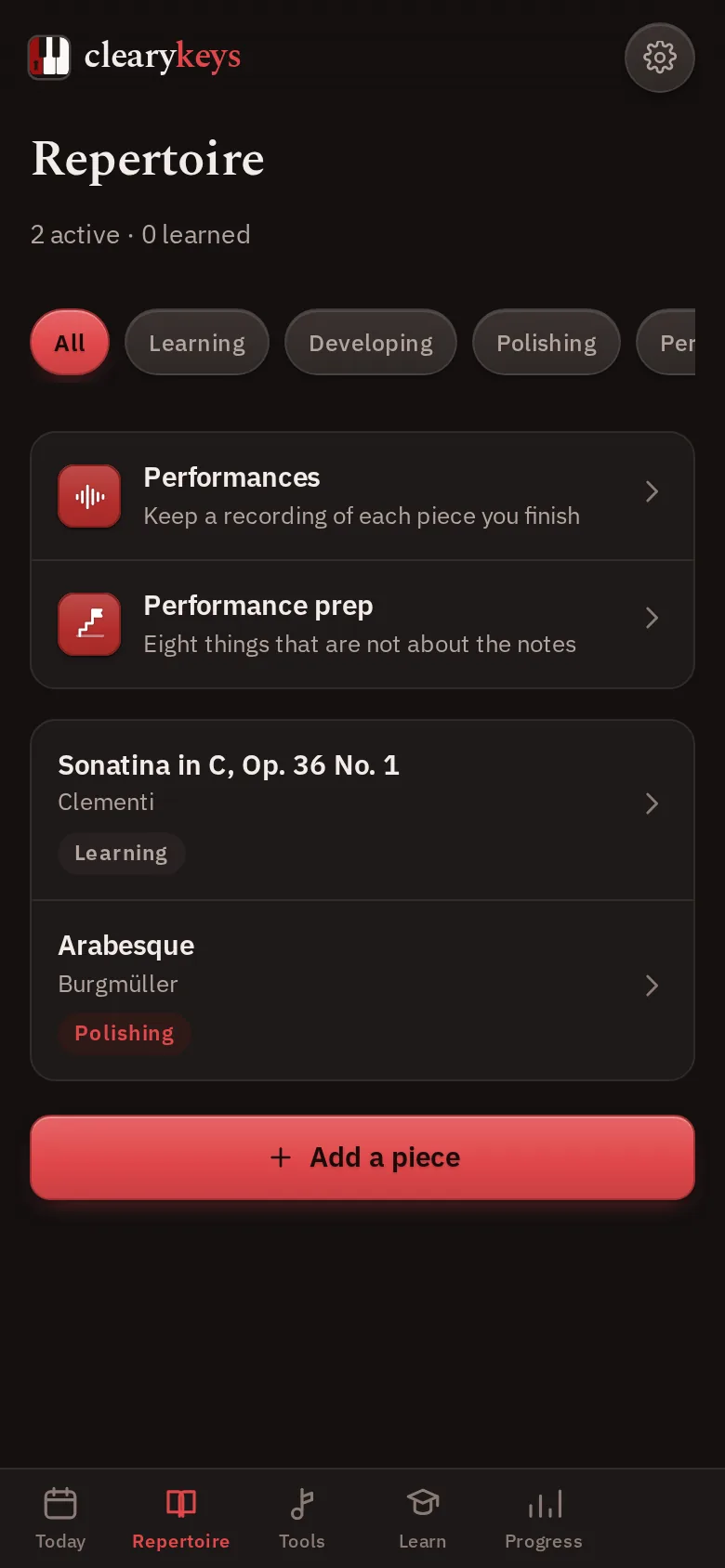
Repertoire with the Clementi sonatina up next and Chopin’s Nocturne and Burgmüller’s Arabesque on the go

NewComposition

Write your own music, one brief at a time.

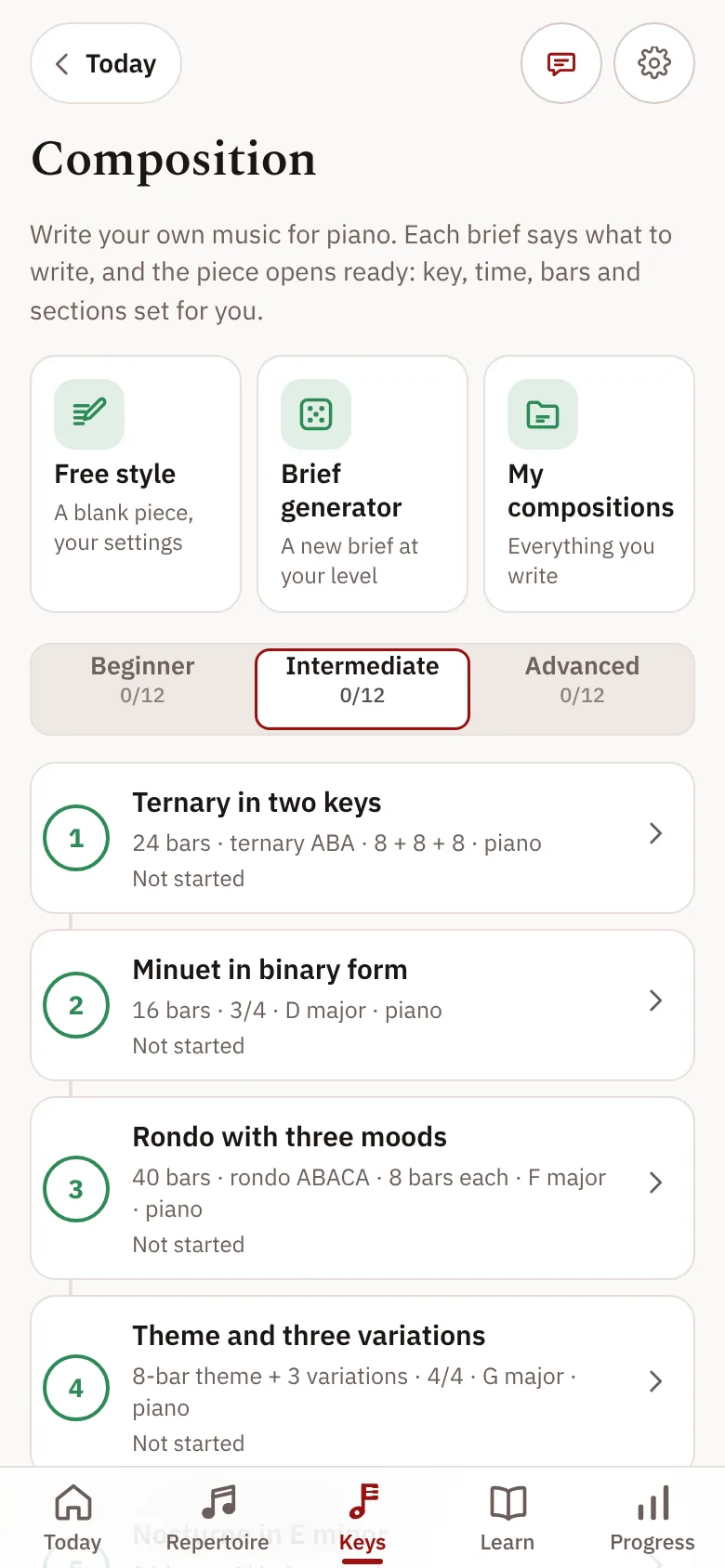
Thirty-six briefs in three trees, from a first eight-bar tune to a four-part chorale. Each brief opens a piece that is ready for you: the key, the time, the bars and the sections are already on the score. Write on the piano keyboard, play it back, and tick off the brief as you go.

Beginner tree · brief 2 of 12

A waltz for a music box

16 bars · 3/4 · G major · piano

The brief

  • Left hand in waltz style: a bass note on beat 1, a chord on beats 2 and 3.
  • Use only chords I and V (G and D).
  • Start mp, crescendo in bars 13–14, end p.
  • A slur over each two-bar phrase.
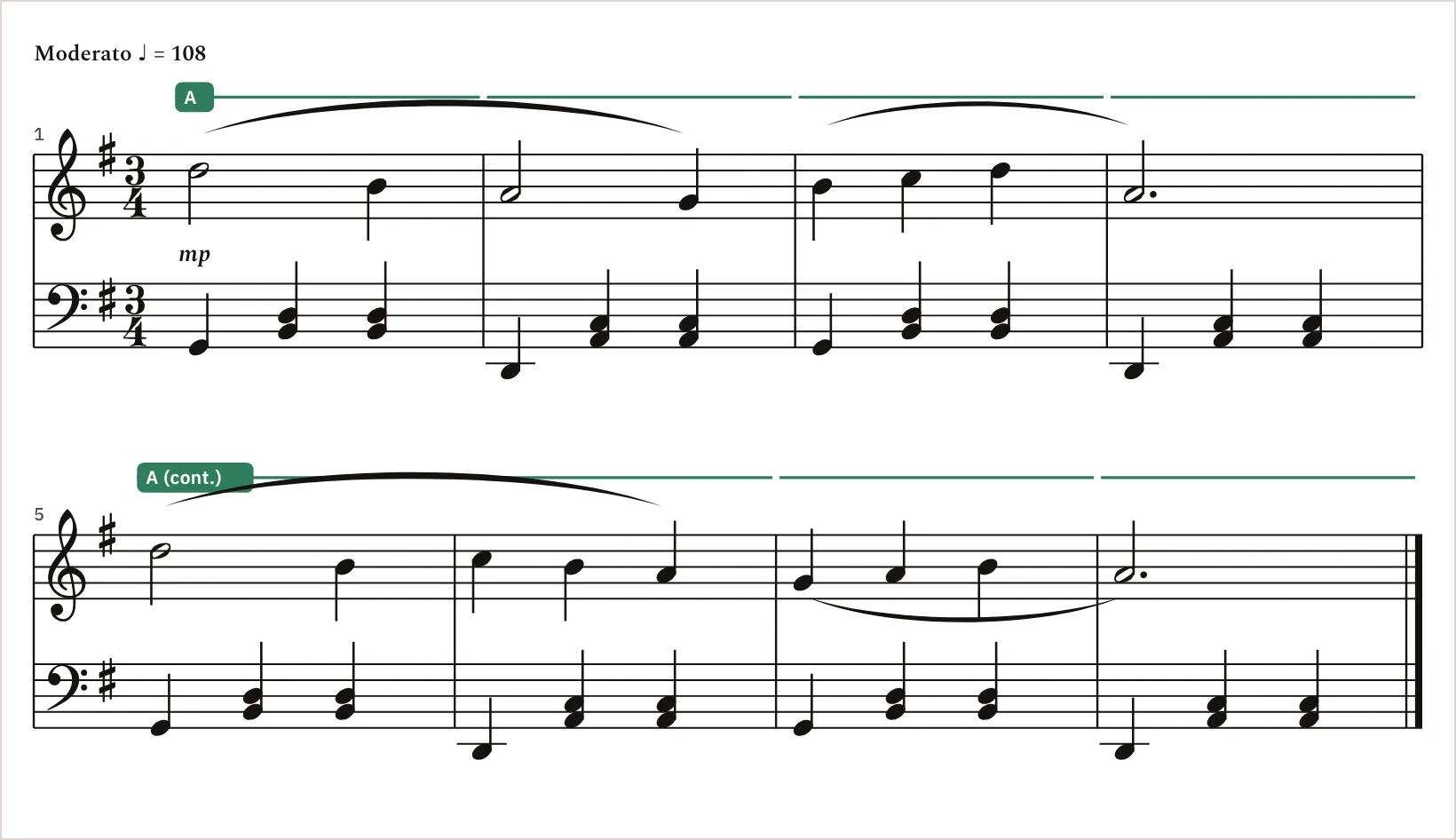
Score: The first eight bars, written in ClearyKeys: section A marked on the score, mp at the start, a slur over each two-bar phrase and the waltz bass under it.
The first eight bars, written in ClearyKeys: section A marked on the score, mp at the start, a slur over each two-bar phrase and the waltz bass under it.

Everything a piano piece needs

  • Chords, and two voices on each stave
  • Slurs, dynamics, hairpins, pedal and fingering
  • Key, time and clef changes from any bar, and an upbeat
  • Repeats, with 1st and 2nd time bars
  • Triplets, ties, staccato, accents, trills and spread chords
  • Play it back, then export it as PDF, MusicXML or MIDI

Briefs 1 to 6 of every tree are free to write, finish and keep. Premium adds briefs 7 to 12, a brief generator, free style and export.

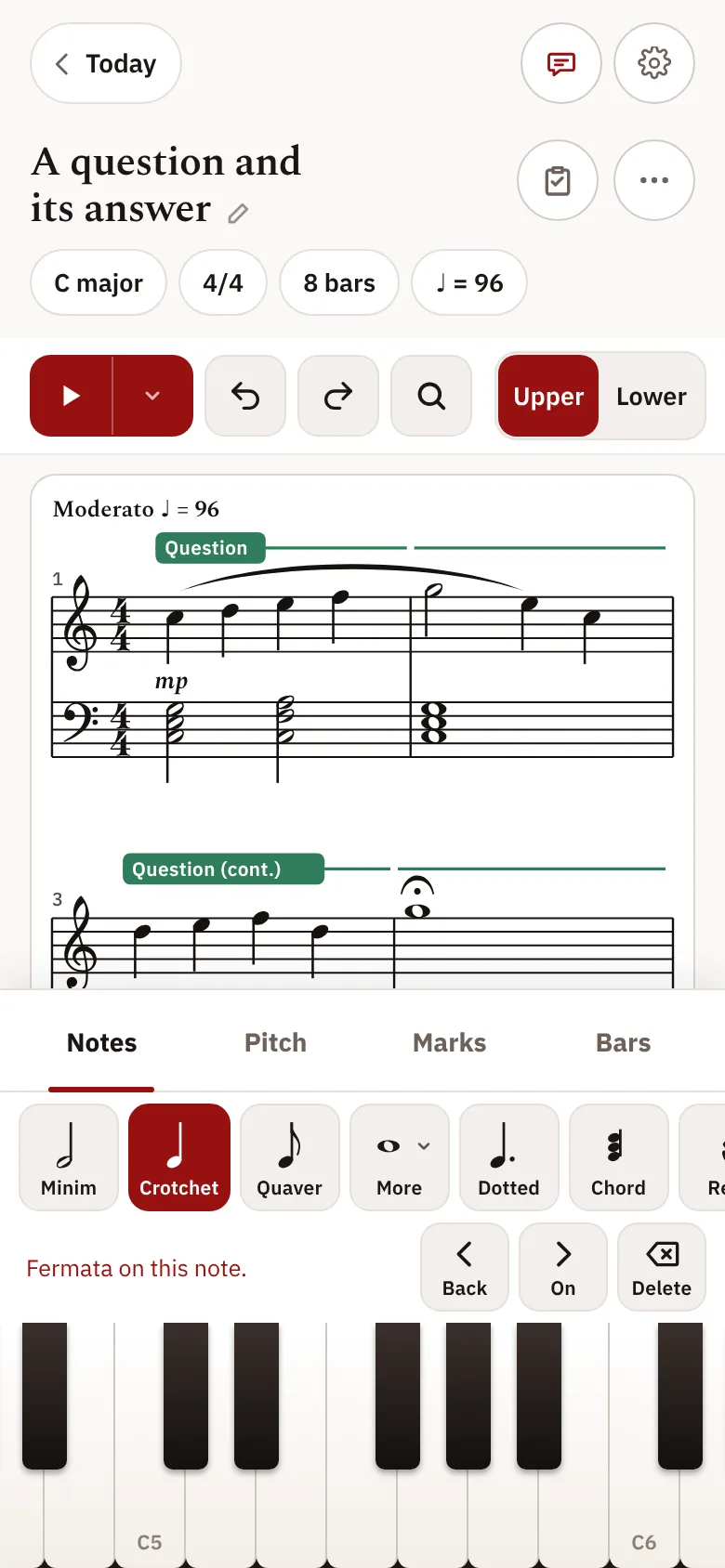
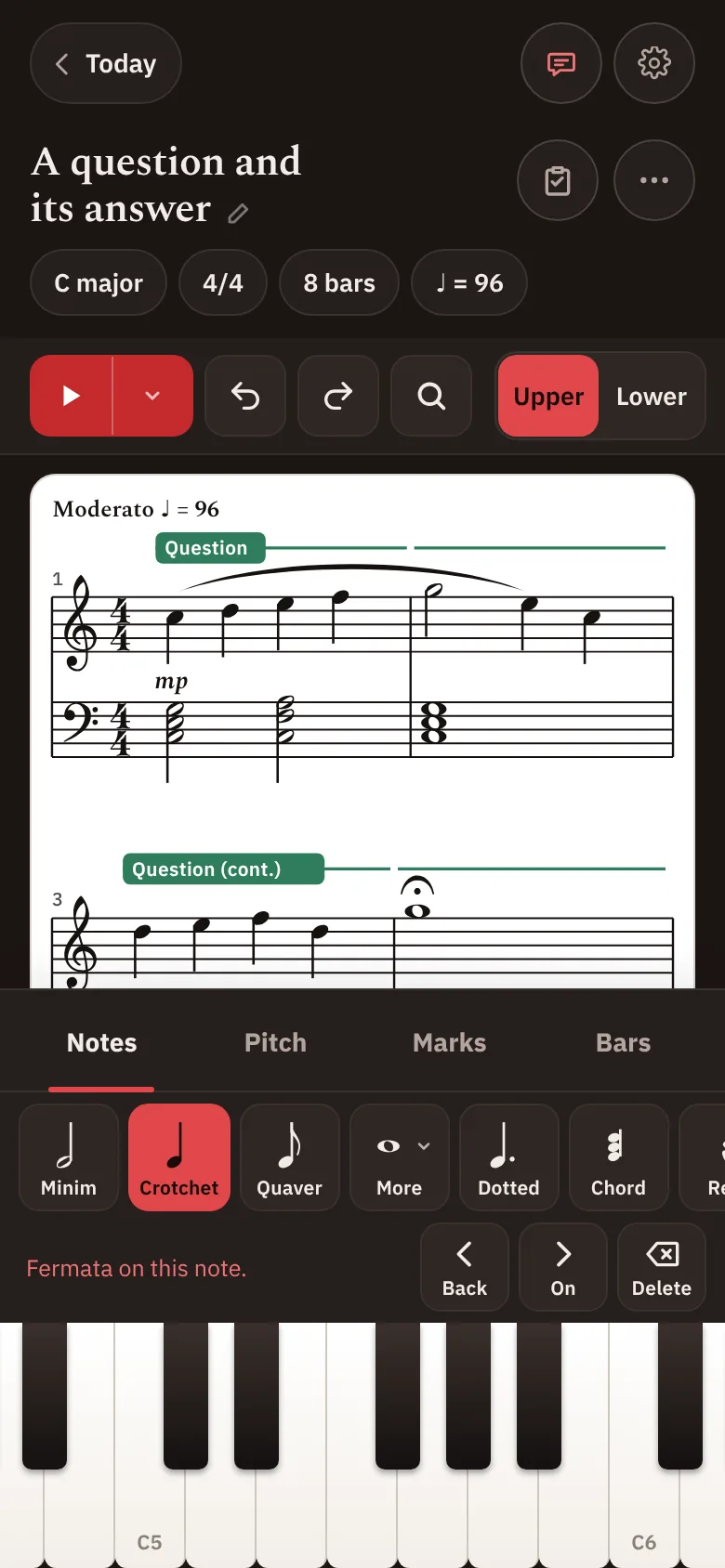
The composition editor: a brief in C major with the Question section marked, tools under Notes, Pitch, Marks and Bars, and a piano keyboard
The Composition page with free style, the brief generator, My compositions and the Intermediate tree of briefs

Practice Lab

103 practice problems. More than 500 ways to fix them.

Say what’s going wrong and the Lab explains why it happens, then gives you approaches and step-by-step exercises aimed at that one thing. Here are six of them, two for each stage of playing.

And 97 more in the app. 58 of them come with exercises written out on the stave, with playback, and the practice coach finds the right page when you describe the problem in your own words.

Sight reading

Something new on the stand, every day.

Each piece is written for you on the spot, inside the syllabus limits for your grade. Pick a level to see what it covers.

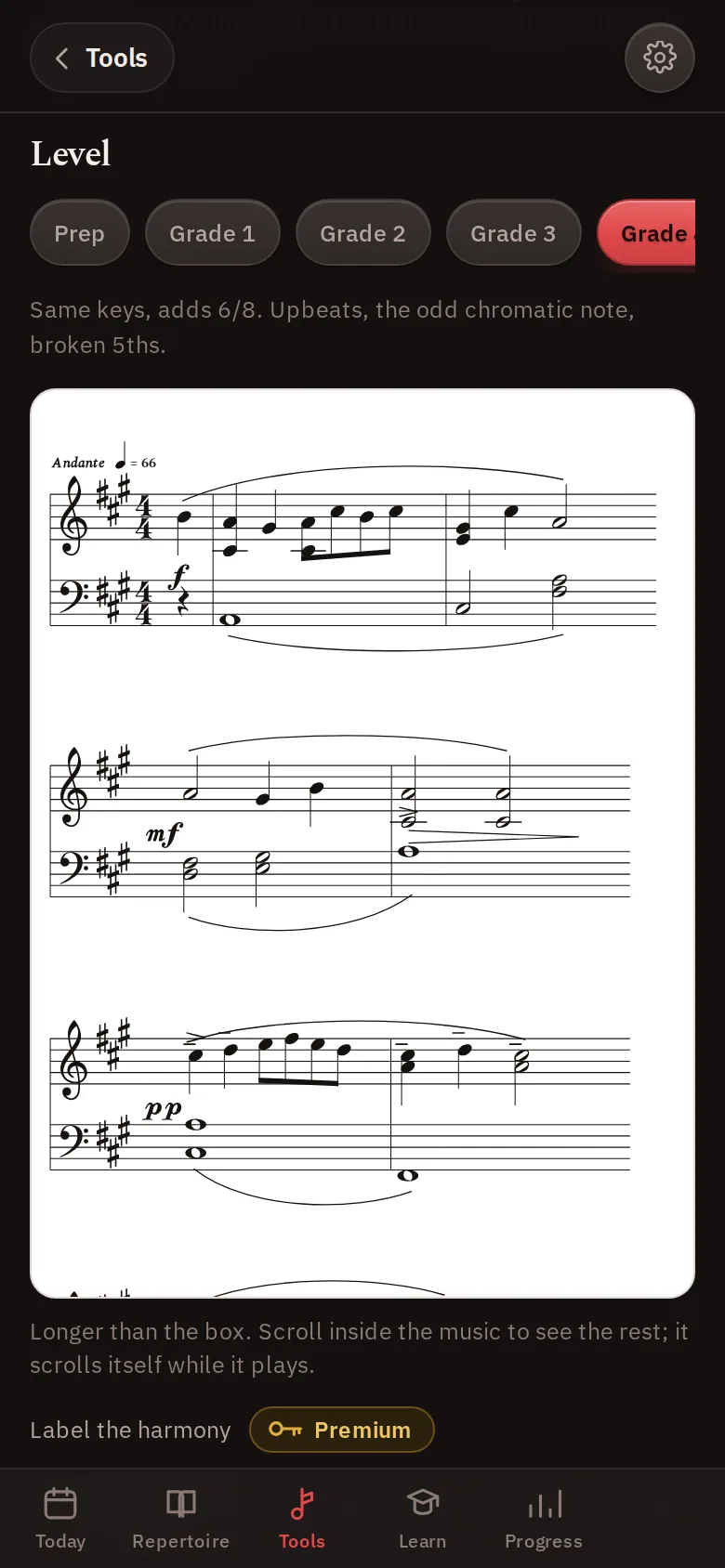
Grade 4Same keys as Grade 3, adds 6/8. Upbeats, the odd chromatic note, broken 5ths.

Every level is free. With Premium you choose the style, the left-hand pattern, the harmony and how hard it is.

A new Grade 4 piece written out on a grand stave

Scales and technique

Every scale, in every key.

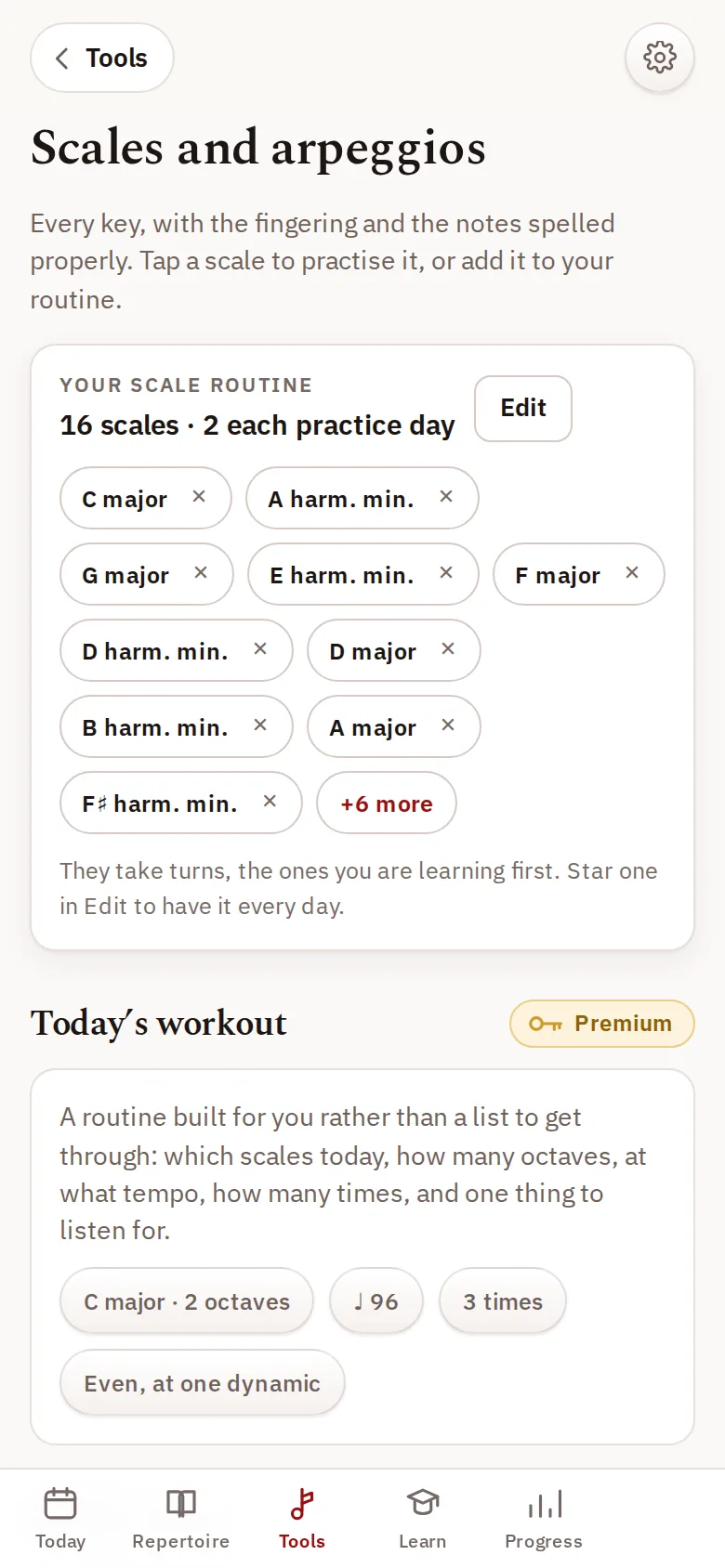
The scale book has each one with its fingering and the notes spelled properly. Technique is one system in five families, with a Getting started path for the first weeks.

372Scales and arpeggios31 kinds, each in all 12 keys
124Technique exercisesIn words, in five families, from how to sit to double notes
70Finger patternsWritten out, playable in any key, trills in threes to sevens included
42Sets of studiesFrom Burgmüller to the Chopin études, 40 with a link to a free score
Scales learned on a grid of every key: 24 of 48 scales and 12 of 24 arpeggios

Rhythm and time

Say it, then play it.

Cross rhythms sound hard until you have words for them. Three against two is not dif-fi-cult. Four against three is two lit-tle but-ter-flies. Press play and say it with the clicks.

Right hand
Left hand
Right handLeft handTogether

Harmony

Build any chord and see what each note is doing.

Pick a root and a type. The keys light up by role, root, third, fifth and seventh, the notes are spelled the way they’re written, and the formula sits underneath.

C

Root
Type
The seventh is outlined, the way the app shows it.

Learn · The theory tree

A theory course that drills it until it sticks.

Twelve stages and 138 short units. It starts before Grade 1, at the black keys, and ends with the chromatic harmony of Grade 8: the augmented sixths and the Neapolitan. A checkpoint lets you skip what you already know. Stages 1 to 6 are free, and stages 7 to 12 come with Premium.

Theory course in stages, with the first two complete
  1. Basic musical grammarThe keyboard, middle C, the first note lengths and the treble stave
  2. Bars, the bass stave and restsBars and time signatures, the bass stave, ledger lines and rests
  3. Quavers, dots and the signs on the pageTies, quavers, dots and semiquavers, and the signs for loudness, speed and touch
  4. Sharps, flats, intervals and new metresSemitones and tones, accidentals, intervals by number, minim and quaver beats
  5. Scales, keys, triads and compound timeFive-finger patterns, the major scale, triads, triplets and compound time, key signatures
  6. Primary chords, cadences, rhythm and formThe circle of fifths, primary chords, inversions, syncopation, relative minors, cadences and form
  7. Minor keys and interval qualityThe natural, harmonic and melodic minor, and major, minor and perfect intervals
  8. Intervals, sevenths and chords in a keyThe tritone, compound intervals, seventh chords, chord symbols, chords in a key
  9. Phrases, form and other scalesQuestion and answer, sonatina form, rondo and variations, the modes, whole-tone
  10. Ornaments, counterpoint and hemiolaTrills, mordents, turns and appoggiaturas, imitation, fugue and suite, hemiola
  11. Chromatic intervals, changing key and figured bassDouble sharps and flats, secondary dominants, modulation, sonata form, figured bass
  12. Chromatic harmony and modern musicThe Neapolitan sixth, the augmented sixths and music since 1900
The performance course

A second path for the day you play for someone. The first unit is free, the rest come with Premium.

MemoryStarting wellHow to practiseFingeringSlow practicePractising for securitySound, pedal and timingInterpretationNervesThe performance itselfYour performance plan

Every level

From the first lesson to postgraduate.

Tell ClearyKeys where you are by the pieces you play. Session length, scales and sight reading all start from there. Move down the levels to see what changes.Tap a level to see what changes.

clearykeysPremium

The whole practice room, shaped around you.

Every practice key works for free. Premium makes each one yours: the piece you ask for, the scales you keep missing, the bars you marked yesterday.

€6.49a month

In the Netherlands, including VAT. Prices differ by country.

Get it onGoogle Play

Premium is a monthly subscription through Google Play. It renews each month, and you can cancel at any time.

Free and Premium, key by keyShow
Practice keyFreePremium adds
Practice planA timed plan every practice day, with a session timerTomorrow’s plan opens on the bars you marked today
Practice LabAll 103 problems, with approaches, a first exercise and the practice coachEvery exercise, and a programme of up to seven sessions
Sight readingA new piece at every level, Prep to DiplomaStyle, left-hand pattern, texture, harmony, difficulty, chord labels and saved presets
Scales and arpeggiosAll 372, with fingering, playback and a routineA daily workout built from the scales you keep getting wrong
Note namingTreble and bass clef, on letters or a keyboard, with or without the clockAlto and tenor clef, your own range, longer rounds
Theory courseStages 1 to 6, and the first unit of the performance courseStages 7 to 12, and the rest of the performance course
Cheat sheetsRead all 34 in the appPrint all 34, in colour or black and white
Sheet musicKeep three scores to read and practise fromEvery score you scan, marked up with pen, highlighter and symbols
Chords and lead sheetsBuild any chord, name any three notes, read lead sheets, play progressionsName any four notes; choose secondary dominants, sevenths and inversions
RhythmMetronome, polyrhythm and trill trainerA metronome that counts out loud; write a bar in two voices and hear it
RecordingsTen audio notes at a timeEvery take, performance recordings, MP3 export, then against now
ProgressYour calendar and your weekSix months of analytics
CompositionBriefs 1 to 6 of every tree: write, finish and keepBriefs 7 to 12, a brief generator, free style, My compositions and export
RewardsXP for every practice day, a road of rewards, titles and seasons to earnColour themes, more backgrounds and the composer busts

Privacy

No ads. No tracking. Your practice stays yours.

Read the privacy policy

  • On your phone. Plans, pieces, scores and recordings are stored on your device, and everything works offline.
  • No ads, no analytics. The microphone only switches on when you press record.
  • An account only if you want one, to carry your progress to another phone. Delete it in the app at any time.

Questions

Can I get ClearyKeys now?
Yes. ClearyKeys is in open testing on Google Play in Ireland and the Netherlands: install it from its Google Play page and you are a tester. It is the same app that launches, and testers get every new version first.
Is there an iPhone version?
Not yet. ClearyKeys is on Android first. An App Store version is planned after the Android launch, with no date yet.
Can I write my own music in it?
Yes. Composition, under Keys, has three trees of briefs from beginner to advanced. Each brief opens a piece set up for you, and you write on a piano keyboard and play it back. Briefs 1 to 6 of each tree are free.
Does it need the internet?
Only the first time you open it. After that every practice key and every sound works offline. If you use a code for Premium, the app checks the code about once a day.
Do I need a piano?
Yes, to practise on. ClearyKeys plans and times the session and gives you the material; it does not listen to your playing and mark it.
Which grades does it follow?
The graded exams used in the UK and Ireland, Prep to Grade 8, with diploma levels above. You do not need to be sitting exams to use it.
I have a code. Where do I type it?
Open Settings, then Your plan, and tap I have a code. A code works on one phone, or on up to three phones and tablets signed in to the same ClearyKeys account.
How do I cancel Premium?
In the Play Store: tap your profile picture, then Payments and subscriptions, then Subscriptions. The subscription terms have the details.

Your next practice starts here.

Open testing is live on Google Play in Ireland and the Netherlands. Install it today, and every new version reaches you first.

Somewhere else?

One email when ClearyKeys reaches your country, then your address is deleted. For ages 16 and over, or with a parent’s permission. How we handle it